0% Interest For 12 Months On Orders Over $5,000! | Shop Now
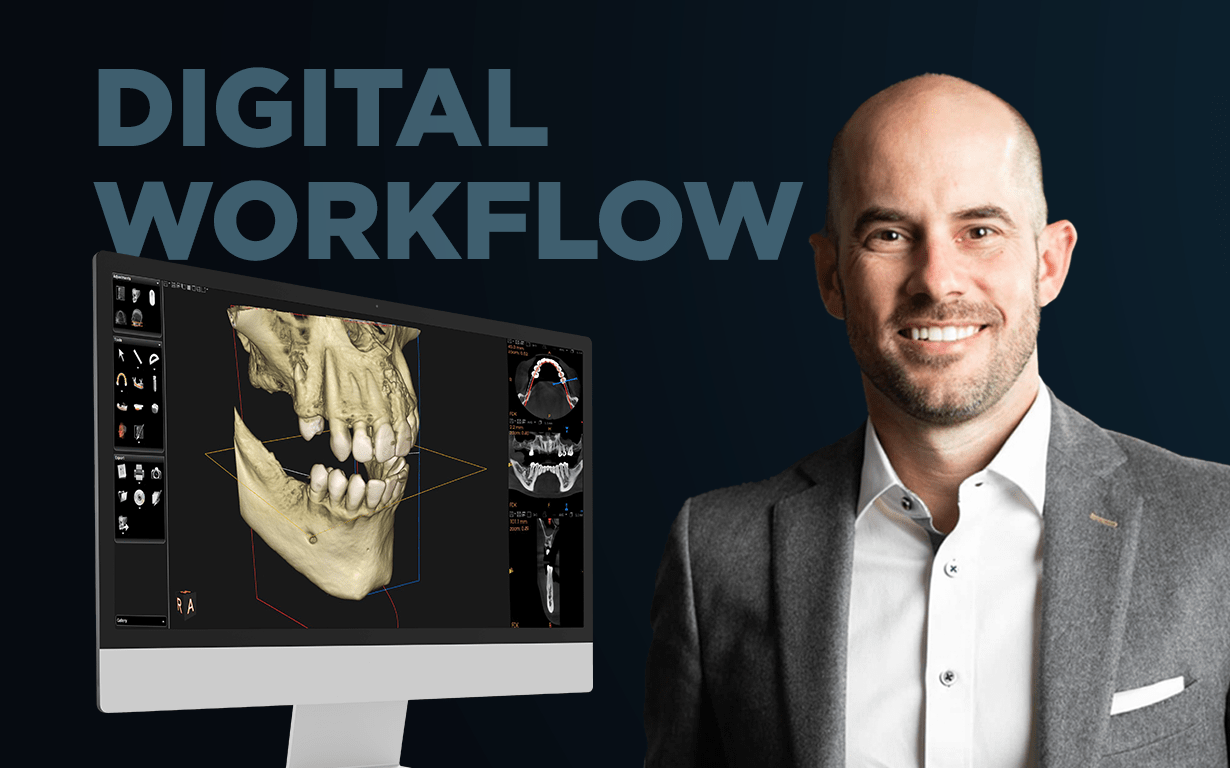
One of the biggest pain points in clinical dentistry is patient fragmentation; patients bouncing between multiple providers, multiple appointments, and months of healing before they even see their final restoration. I’ve lived that model. I’ve also spent the last decade tearing it down and rebuilding a better one. Today, I want to share the workflow that has allowed me to take a patient from fractured tooth to final restoration, complete with a protective guard, in just four appointments.
This isn’t a shortcut. It’s a smarter, technology-driven, team-centered workflow that respects the patient’s time, streamlines clinical care, and reignites the joy of practicing dentistry.
Let’s start with the reality we all face: patients are consumers. They’re making time, financial, and emotional investments in our practices. In a traditional model, a simple tooth replacement can span 8 – 10 visits over 6 – 12 months. That means the patient must take PTO, get multiple referrals, experience long healing periods, etc. There are far too many opportunities to drop off the radar.
When I started building my digital ecosystem, my primary question was: how do I reduce the barriers that cause patients to say no? Because time, money, and fear aren’t just obstacles – they’re dealbreakers.
Every great outcome starts with case selection. I categorize cases as green, yellow, or red light:
To diagnose and plan effectively, my practice uses these following technologies:
Tooth removal isn’t about brute force, it’s about access, expansion, and preservation. With the right approach, I can maintain the buccal plate and cortical walls, giving myself a predictable foundation for grafting and future implant placement.
And yes, my assistants handle membrane removal, and no, we rarely need to numb.
After 4 – 6 months of healing, we bring the patient back. Now the digital magic kicks in:
Guided surgery isn’t about being flashy. It’s about precision, efficiency, and confidence, especially for those earlier in their implant journey.
Bonus? I scan for the final restoration the same day I place the implant before the tissue collapses.
One of the biggest upgrades I’ve made is 3D printing custom healing abutments. These aren’t just cool, they build an ideal tissue form and give us predictable emergence profiles that make crown delivery smooth and suture-free.
When it comes to final restorations:
And if there’s any occlusal risk? I digitally design and print a night guard too, on the same visit.
Here’s how we condense a year-long process into four appointments:
That’s it. Four well-planned visits, supported by a trained team and efficient digital systems.
Digital dentistry didn’t just change my practice; it changed how I think. With the right tools, training, and team, we can remove friction, reduce appointments, and deliver higher quality care in less time. This workflow doesn’t replace great dentistry – it enhances it.
So, whether you’re starting your implant journey or scaling a digital practice, I encourage you to start simple, think green light, and never underestimate what’s possible when your whole team moves with purpose.
Dr. Timothy Anderson is the owner and founder of Missouri River Dental in Bismarck, North Dakota. With a passion for utilizing technology to elevate patient care, Dr. Anderson specializes in integrating CBCT imaging, 3D printing, and CEREC milling into advanced dental workflows.
After earning his Doctor of Dental Surgery degree from the University of Minnesota School of
Dentistry, Dr. Anderson completed a general practice residency at Hennepin County Medical Center, a Level 1 Trauma Center. A Key Opinion Leader for Convergent Dental and Sprintray, Inc., he is widely recognized for his expertise in dental lasers and 3D printing.
Dr. Anderson has been featured in leading dental publications, including Dental Economics, Dental Town, and Inside Dentistry. He also serves as a mentor for CEREC Doctors and the University of Mary in Bismarck, where he inspires fellow dental professionals to adopt innovative approaches to dentistry.